

Views: 0 Author: Site Editor Publish Time: 2026-11-24 Origin: Site


Modern metal fabrication faces a brutal reality today. Profit margins shrink daily. Project deadlines tighten relentlessly. As facility managers and shop foremen, we are constantly pushed to boost efficiency. Yet, we absolutely cannot sacrifice structural integrity. In the past, manual pipe profiling served as the reliable backbone of shop floors. Today, those traditional techniques are massive liabilities. Handheld processes guarantee dimensional inconsistencies. They bleed money through exorbitant direct labor costs. Production cycles drag, and scrap bins overflow with wasted material.
Automated and semi-automated processing technology solves these critical bottlenecks. These robust systems are no longer luxury upgrades. They are survival tools for the modern shop floor. Facilities must adapt to remain competitive in a fierce global market. This guide breaks down how upgrading your equipment impacts daily operations. We will examine the tangible financial benefits, compare current technologies, and outline actionable criteria to help you select the exact machinery your manufacturing floor needs.
Looking at the current trajectory of industrial manufacturing, the shift toward smart fabrication is undeniable. Recent market data shows a massive acceleration in the adoption of connected machinery. Shops are moving rapidly away from isolated manual stations toward integrated, data-driven workflows. This industry-wide transition focuses heavily on predictive maintenance, real-time material tracking, and eliminating human error. By adopting advanced processing equipment now, fabrication floors align themselves with these emerging Industry 4.0 standards. This secures their position in a rapidly digitizing supply chain and builds immense trust with top-tier industrial clients.
Unmatched Precision: Advanced machinery effectively eliminates human error. It consistently provides perfectly accurate straight cuts and precise bevels across high-volume production runs.
Massive ROI: Upgrading your equipment drastically reduces manual labor costs. It minimizes expensive material waste and exponentially increases overall shop capacity.
Versatility in Operations: Modern systems handle multiple fabrication operations within a single setup, from executing standard cut-offs to processing complex joints.
Technology Choices: The decision between utilizing plasma, laser, or hydraulic cold cutting depends heavily on your capital budget, standard material thickness, and strict tolerance requirements.
Competitive Edge: Integrating modern equipment modernizes your fabrication shop. This enables your business to successfully bid on and fulfill more complex, high-paying industrial contracts.
Think about the actual impact of this technological leap on the shop floor. At its core, a modern Pipe Cutting Machine replaces guesswork with absolute certainty. It utilizes engineered mechanics to dictate the movement of the cutting mechanism with pinpoint accuracy.
I have seen veteran fabricators spend hours with wrap-around templates and soapstone markers. They guide torches by hand or wrestle with mechanical band saws, then spend another hour grinding the bevel just to make the pieces fit. This manual workflow is physically grueling. It is also highly susceptible to human error. One unsteady hand easily ruins a costly 20-foot stick of raw carbon steel.
Consequently, the introduction of advanced cutting technology fundamentally transformed this dynamic. Modern systems execute highly precise, repeatable movements. This technological shift elevates the role of the traditional fabricator. Instead of performing strenuous manual slicing and grinding, the worker transitions into a skilled machine operator. They oversee processes that deliver flawless, ready-to-weld results in a fraction of the time.
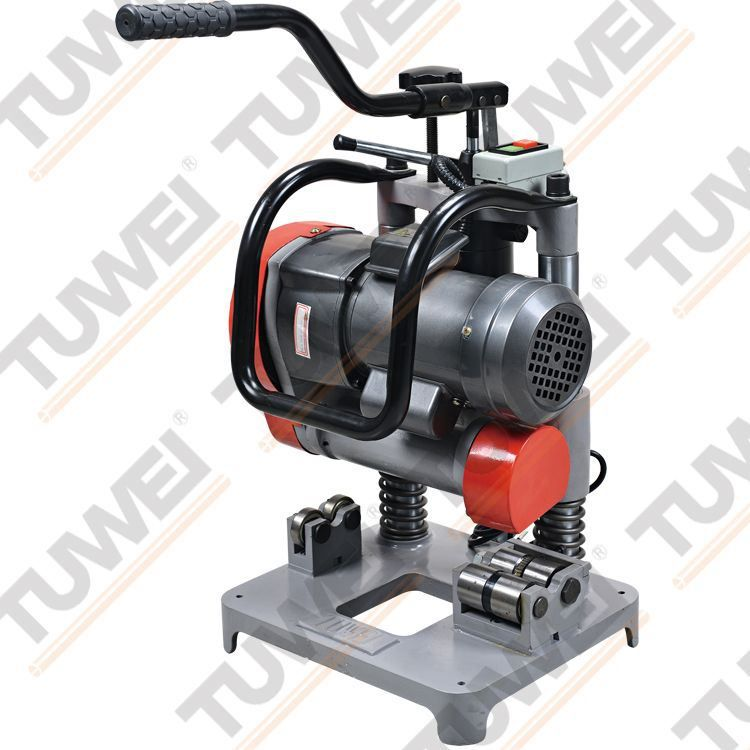
Integrating advanced processing equipment yields immediate and measurable operational advantages. The transformation becomes undeniably evident across three primary metrics. These are precision, speed, and material utilization.
Exact tolerances are non-negotiable in pressure vessel manufacturing and structural piping applications. Machine controls ensure that every cut adheres precisely to the required dimensions. This extreme accuracy is paramount for pipe fitting and welding preparation. Specifically, when pipes are profiled with such high precision, the fit-up process becomes seamless. Welders no longer waste time filling large gaps caused by poor manual cuts. This directly improves the structural integrity of the final weld and significantly reduces the likelihood of failing strict non-destructive testing.
Time is the most valuable commodity in any manufacturing facility. An advanced cutting system completes complex profiles in a matter of seconds. To put this into perspective, a manual layout and cut that takes an experienced fabricator two hours to complete can be executed by automated machinery in under five minutes. This drastic reduction in cycle time allows facilities to push far more tonnage through the shipping doors on a daily basis.
Furthermore, raw material costs constitute a massive portion of any project budget. Traditional manual cutting often results in significant scrap material due to inefficient planning and human error. Modern machines combat this through optimized cutting mechanics and precise feed controls. The machine ensures maximum material utilization. This saves substantial capital on raw steel, aluminum, or stainless stock over the fiscal year.
For shop owners and financial decision-makers, the transition to modern equipment must be justified by a strong Return on Investment. The financial impact of implementing a heavy-duty hydraulic electric steel pipe cutter extends far beyond simply making faster cuts. It fundamentally restructures the profitability of the business.
Skilled labor shortages continue to plague the industrial sector. Advanced machinery mitigates this issue by acting as a powerful force multiplier. A single trained operator running a modern pipe cutter easily matches or exceeds the output of three to four manual fabricators. By automating the most tedious preparation work, management can reallocate their highly paid certified welders to high-value tasks that actually generate revenue.
One of the hidden financial drains of manual cutting is the extensive post-cut processing required. Handheld plasma or oxy-fuel cuts inevitably leave dross, hardened slag, and irregular edges. These require heavy mechanical grinding before they can be welded. In contrast, modern cold cutting and automated cuts are exceptionally clean. The heat-affected zone is minimized or completely eliminated. Eliminating this secondary grinding phase saves countless labor hours and drastically reduces the monthly consumption of expensive abrasive discs.
When investing in processing equipment, facilities must choose the appropriate cutting technology. Different power sources and mechanical designs offer distinct advantages depending on your specific industrial application.
Technology Type | Best Application | Key Advantages | Limitations |
|---|---|---|---|
Plasma Cutting | Heavy industrial, thick carbon steel | Affordable upfront, slices through thick, dirty, or rusty metals easily. | Wider kerf, generates a heat-affected zone, requires post-cut slag grinding. |
Fiber Laser | Thin-walled sanitary tubes, aerospace | Extreme precision, microscopic kerf, incredibly fast, zero mechanical distortion. | High initial capital cost, limited maximum wall thickness processing. |
Hydraulic Electric Cold Cutting | On-site maintenance, groove preparation, fire-safe zones | Zero sparks, no heat-affected zone, highly portable, perfect clean edge for roll grooving. | Slower than laser on thin materials, primarily limited to straight cut-offs. |
Purchasing industrial equipment requires careful technical evaluation. Do not just look at a specification sheet. Consider the following actionable criteria before making your final investment to ensure the machine aligns perfectly with your production goals.
Your primary consideration should be the materials your shop processes most frequently. For heavy-duty industrial piping, a robust steel pipe cutter equipped with a high-power induction motor and a hydraulic feeding cylinder is ideal. It handles thick walls effortlessly without generating heat-affected zones. Conversely, if you specialize in thin-walled stainless steel for food-grade applications, a fiber laser is undeniably the superior choice for maintaining material integrity.
Look for equipment that offers stable, relentless power delivery. Machines featuring high-performance gear reduction drives ensure consistent torque. This prevents the cutting wheel or blade from stalling when biting into heavy-wall carbon steel pipes. Reliable hydraulic systems provide smooth, uniform feeding pressure, which extends the lifespan of your cutting consumables and ensures a perfectly square cut.
Consider where the cutting actually takes place. Does the machine need to move to the job site? Cold cutting machines eliminate fire hazards entirely. They require no hot work permits. This is a massive advantage for on-site facility maintenance, petrochemical plants, and commercial plumbing installations where open flames are strictly prohibited.
An advanced pipe cutter does much more than slice through metal. It modernizes your entire metal fabrication workflow, serving as the beating heart of a profitable business. While the initial capital expenditure might seem significant at first glance, the massive long-term savings make this an absolutely essential upgrade. You save on manual labor, drastically reduce material waste, and achieve faster turnaround times.
If shrinking margins and labor shortages are hurting your bottom line, the time to act is now. Stop letting manual bottlenecks eat your profits. Evaluate your current production workflow and identify where slow processing holds you back. Ready to modernize your fabrication process? Explore the high-performance Pipe Cutting Machine lineup at Tuwei. Their hydraulic electric solutions deliver the precision, safety, and speed required to keep your projects profitable. Equip your team with the right tools today.
The safest and most efficient method for spark-free cutting is using a hydraulic electric cold pipe cutting machine. These machines utilize a specialized cutting wheel and hydraulic feeding mechanism to cleanly sever the pipe without generating heat, flames, or sparks. This makes them perfectly suited for hazardous environments where hot work permits are difficult to obtain.
Routine maintenance is straightforward but critical for optimal performance. Operators should regularly check the hydraulic fluid levels and inspect the system for any leaks. Keep the gear reduction drive properly lubricated. Additionally, inspect the cutting wheels daily for dullness or chipping, and replace them immediately to ensure clean, square cuts and prevent unnecessary strain on the induction motor.
Prices vary widely based on the underlying technology, size capacity, and integrated automation features. Portable hydraulic cold cutters are highly cost-effective for everyday shop and site use. Entry-level CNC plasma systems may start around $20,000. High-end, fully automated fiber laser machines equipped with automatic loading systems can range well over $500,000. The investment must always be weighed against projected labor savings and increased throughput.
Most industrial cutting machines are highly versatile. They easily process carbon steel, stainless steel, aluminum, copper, and brass. The specific capabilities and maximum cutting thicknesses depend entirely on the power source and the mechanical design of the specific unit.
Yes, modern CNC machines are engineered for maximum versatility. They come equipped with specialized, self-centering chucks and advanced software that seamlessly process round pipes, square tubes, and rectangular structural steel without requiring extensive mechanical retooling between jobs. Cold cutting wheel machines, however, are specifically designed for round pipes.
Operating modern machinery is highly intuitive. Whether using a user-friendly CAD/CAM software interface on a CNC machine or operating the hydraulic feed valve on a cold cutter, the learning curve is minimal. With professional guidance, fabricators with standard shop experience typically become proficient machine operators in a matter of days.
A tube laser uses a highly focused beam of light to deliver extreme precision, perfect edge quality, and rapid cutting speeds on thinner materials. A plasma cutter uses a high-velocity stream of ionized gas. While it has a slightly wider kerf, plasma is highly robust, cost-effective, and excels at cutting very thick, heavy-duty pipes where a laser might struggle.