

Views: 0 Author: Site Editor Publish Time: 2026-11-24 Origin: Site


Picture this scenario. You are in the final stages of a high-pressure pump installation. You reach for the last spool piece, only to realize that an uneven, jagged edge is preventing a secure flange fit. It is an infuriating reality for frontline contractors and DIY enthusiasts alike. Poorly executed cuts inevitably lead to weak joints, persistent leaks, and ultimately, failed pressure tests.
The root of this problem lies in the diverse nature of the materials themselves. Slicing through brittle PVC, manipulating soft copper, and breaking down tough carbon steel require completely different mechanical approaches. Applying the wrong tool or technique will almost certainly ruin expensive materials. Worse yet, it compromises the structural integrity of your entire piping system.
This comprehensive guide will walk you through the most effective manual methods for various tubular structures. More importantly, we will highlight the ultimate solution for achieving precision, speed, and scale: mechanized cutting equipment. Whether you are repairing a simple residential sink or outfitting a massive commercial facility, mastering the art of clean, square cuts is an indispensable skill.
Material Matters: PVC, copper, and metal each possess distinct structural properties. They demand specific blade types and cutting pressures to avoid cracking, crushing, or warping.
Manual vs. Machine: While manual ratcheting shears and tubing cutters serve well for quick, low-volume jobs, automated equipment becomes absolutely essential for high-volume, thick-walled, or heavy-duty industrial applications.
Preparation is Key: Accurate measuring, marking, and securing the workpiece firmly in a vise are just as critical as the actual severing process to ensure dimensional accuracy.
Safety First: Proper deburring techniques and the use of appropriate personal protective equipment prevent workplace injuries and guarantee a watertight seal for subsequent fittings.
Achieving a flawless, square edge depends entirely on matching your implement to the specific material and the overall volume of your workload. Selecting the incorrect device often leads to material waste and excessive physical strain.
For minor residential repairs or occasional weekend projects, manual hand tools remain the standard starting point. They are accessible, affordable, and effective for small-scale tasks.
Hacksaws: Widely considered the universal budget option. While versatile enough to chew through most plastics and thin metals, hacksaws are notoriously difficult to keep straight. They typically leave heavy burrs and jagged edges that demand extensive filing before assembly.
Ratcheting PVC Cutters: Operating much like heavy-duty pruning shears, these cutters utilize a ratcheting mechanism to multiply hand force. They slice through small-diameter plastic lines with minimal physical exertion.
Rotary Tubing Cutters: The industry standard for soft metals. These devices clamp onto the exterior wall. They utilize a hardened steel wheel and guide rollers to gradually score and separate the metal as the tool rotates. This produces a clean edge without generating internal shavings.
When projects scale up from basic home repairs to commercial installations or industrial fabrication, manual tools quickly become a severe bottleneck. For contractors, industrial workers, and heavy-duty fabricators, a rotary cold cutter offers a highly efficient mechanized solution.
This equipment is the superior choice because it entirely eliminates operator fatigue and guarantees perfectly square geometry every single time. By automating the rotation and applied pressure, these devices remove human error from the equation. They ensure consistent, repeatable results across hundreds of cuts, even on the thickest steel mains.
Cutting Method | Precision Level | Speed | Safety Factor | Ideal Application |
|---|---|---|---|---|
Manual Hand Tools | Low to Medium | Slow | Moderate | Minor residential repairs, tight spaces |
Abrasive Grinders | Low | Fast | Low | Rough demolition, scrap removal |
Mechanized Cold Cutters | Extremely High | Very Fast | High | Commercial installations, factory fabrication |
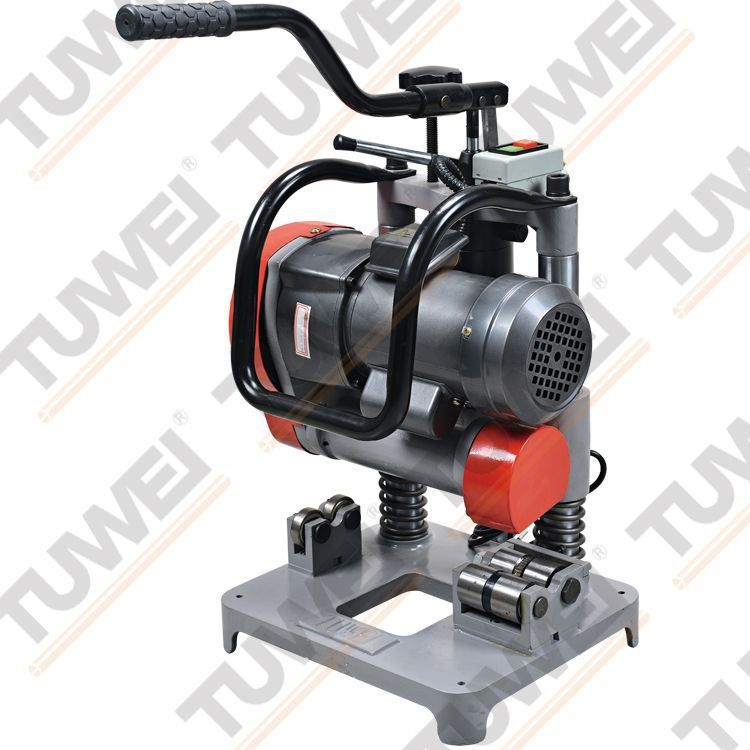
The plumbing and industrial fabrication sectors are currently undergoing a massive operational shift. Stricter job site fire safety regulations are pushing traditional abrasive grinding methods to the sidelines. Securing hot work permits for spark-producing tools is becoming increasingly difficult and costly. Consequently, contractors are adopting cold-cutting technology at unprecedented rates.
Furthermore, the ongoing skilled labor shortage demands tools that reduce the margin for human error. Mechanized solutions bridge this critical gap. They deliver repeatable, factory-grade precision without requiring decades of manual welding or fitting experience. This evolution is not just a passing trend; it is rapidly becoming the new standard for commercial project compliance.
Polyvinyl chloride is a rigid plastic widely favored in drainage and irrigation. However, it is inherently brittle. If processed improperly, especially in cold weather environments where the plastic hardens and loses flexibility, PVC is highly prone to cracking, shattering, or splintering down its length.
For standard residential PVC measuring up to 2 inches in diameter, a ratcheting cutter is the most efficient manual option. Begin by marking your measurement clearly with a permanent marker. Position the blade directly over the mark, ensuring the tool is held at a strict 90-degree angle. Squeeze the handles to engage the ratchet, then release and squeeze repeatedly. You want to apply steady pressure. Twisting the tool side-to-side will cause white stress marks and eventually snap the plastic unevenly.
For larger diameters where ratcheting shears cannot fit, a miter saw equipped with a fine-tooth plastic-cutting blade serves as a viable alternative. Secure the workpiece firmly to prevent vibration, which is the primary cause of chipping.
Industrial and commercial applications frequently utilize dense Schedule 80 PVC or massive municipal drainage lines. Manually sawing through these heavy-duty plastics is labor-intensive and frequently results in off-axis, angled edges.
Automated equipment handles large-diameter plastics with absolute precision. By securing the material and applying consistent rotational force, the machine ensures a perfectly flush face. This flush face is non-negotiable for solvent welding. If the edge is angled, the PVC cement will not distribute evenly inside the fitting. This compromises the chemical bond and leads to inevitable pressure blowouts during system testing.
Copper is a relatively soft, malleable metal. This makes it excellent for routing complex water lines. However, this malleability means the cylinder is easily deformed. Applying excessive clamping pressure or using a dull blade will crush the copper into an oval shape. A crushed end will not slide into a push-to-connect fitting, nor will it maintain the tight capillary gap required for proper soldering.
The most reliable manual method for this material is the rotary tubing cutter. Imagine working under a cramped kitchen sink; this compact tool is often your best friend.
Open the jaws and place the copper onto the support rollers. Align the cutting wheel with your measurement mark. Tighten the knob until the wheel just bites into the metal, but do not overtighten. Rotate the tool completely around the circumference to create a score line. Tighten the knob slightly and rotate again. This mechanical principle works through displacement, wedging the soft metal apart rather than tearing it.
Manual rotary cutters are effective, but they are incredibly slow. In commercial plumbing installations, extensive HVAC routing, or large-scale residential repiping, manually scoring hundreds of copper lines leads to severe hand fatigue and lost productivity.
In these high-volume scenarios, upgrading to automated pipe cutting machines is highly recommended. These compact devices clamp around the exterior and automatically rotate the cutting wheel at high speeds. They deliver clean, installation-ready edges in a fraction of the time, even in tight spaces between floor joists.
Galvanized steel, cast iron, and stainless steel are unforgiving materials. They possess high tensile strength and significant wall thickness. Attempting to process these materials with manual hand tools is physically exhausting, highly inefficient, and generally impractical for professional applications.
Historically, workers relied on abrasive tools or reciprocating saws to manage steel. These methods carry significant drawbacks. Angle grinders equipped with cutoff wheels can slice through steel rapidly. However, they generate intense heat and a hazardous shower of flying sparks. Furthermore, holding a grinder perfectly steady to achieve a 90-degree square face is nearly impossible. This results in uneven edges that require heavy secondary grinding.
Reciprocating saws are excellent for demolition work where precision does not matter. For installation, however, the blades vibrate violently and tend to wander. They leave jagged, angled cuts that are entirely unsuitable for threading or welding.
For precise fabrication, a dedicated professional pipe cutting machine is an operational necessity. Instead of using abrasive friction that melts and tears the metal, these units use high-speed steel or carbide-tipped rotary blades that machine the metal away. The module rotates around the circumference, delivering a steady, controlled feed rate. The result is a spark-free, burr-free, and perfectly square cut that is immediately ready for roll grooving or orbital welding.
For contractors, fabrication shops, and serious builders, relying on manual labor for material preparation directly impacts the bottom line. Upgrading to mechanized equipment transforms the workflow. Here is an objective look at why investing in automation alters the operational landscape.
A 90-degree square face is the foundational requirement for secure joining. If an edge is off by even a few degrees, it creates uneven gaps. In welding, this leads to weak, porous joints. In threading, it causes the dies to cut crooked threads, resulting in inevitable leaks. Mechanized equipment locks firmly into place, guaranteeing geometric precision.
Time is a measurable asset in construction. Severing a 4-inch Schedule 40 steel main by hand with a hacksaw can take upwards of 15 exhausting minutes. An angle grinder might take 5 minutes but requires another 5 minutes of edge cleanup. Conversely, automated equipment can complete the exact same task in under a minute, ready for immediate installation.
Abrasive saws and grinders produce airborne particulate matter, intense noise, and severe fire hazards via sparks. They are also prone to dangerous kickbacks if the blade binds in the kerf. Mechanized rotary cutters operate smoothly. They enclose the cutting mechanism and eliminate flying sparks, creating a demonstrably safer job site.
When metal is severed with abrasive heat, it creates a Heat-Affected Zone. The extreme temperature alters the metallurgical structure of the steel, making the edge brittle and highly prone to corrosion. Cold cutting technology relies on sharp tooling and controlled speeds to machine the metal without generating excess heat, fully preserving the original structural integrity.
Modern high-end fabrication units are not single-trick devices. By simply adjusting the feed rate and swapping the tooling, a single unit can process PVC, copper, and thick-walled carbon steel. This effectively consolidates your equipment needs.
Even with the best machinery at your disposal, adhering to foundational best practices ensures optimal results and mitigates risk. Combining professional safety standards with practical operational habits is vital for flawless execution.
Accurate measuring goes beyond simply checking the overall length. You must account for the makeup dimension. This is the portion of the cylinder that disappears inside the fitting. Whether you are using glued PVC fittings, soldered copper joints, or threaded steel connections, failing to add the insertion depth to your total measurement will result in a segment that is too short for the assembly.
Processing tubular structures, even with advanced machinery, can sometimes leave a micro-edge or internal lip. Leaving burrs on the inside causes fluid turbulence. Over time, this erodes the inner wall in a process called cavitation. On the outside, sharp burrs will slice the rubber O-rings inside push-to-connect fittings, causing immediate leaks. Always use a dedicated reaming tool or half-round file to smooth both the internal and external diameters before assembly.
Operating motorized equipment demands strict adherence to personal protective equipment standards. Always wear ANSI-rated safety glasses to protect against rogue metal chips. Utilize cut-resistant, heavy-duty gloves when handling freshly processed metal, as the edges can be razor-sharp. Finally, because industrial fabrication generates significant decibel levels, earplugs or earmuffs are necessary to prevent long-term auditory damage.
Investing in mechanized equipment requires a careful evaluation of your specific operational environment and the materials you most frequently handle.
If your primary workflow involves pre-fabrication in a controlled environment, a heavy-duty benchtop or floor-mounted model offers maximum stability and torque. However, if you are a contractor working in the field, portability is paramount. Orbital clamshell cutters that clamp directly onto installed infrastructure allow operators to perform precise modifications without dismantling the entire plumbing system.
Equipment is rated by its clearance capacity. When selecting heavy-duty mechanized cutting equipment, you must choose a machine based on the maximum wall thickness and the outside diameter you handle most often. For instance, a premier shop-grade unit is engineered to seamlessly process steel mains ranging from 2 inches up to 8 inches in diameter. It should effortlessly handle Schedule 10 through Schedule 40 wall thicknesses without bogging down the motor. A device designed for 2-inch residential copper will simply not possess the torque or clamping diameter required for these heavy-duty industrial tasks. Always review the technical specifications carefully to ensure alignment with your most demanding projects.
While hacksaws and manual shears certainly have their place in a basic toolkit for minor fixes, they simply cannot compete with modern technology when it comes to larger, more demanding projects. The materials you work with dictate your approach, and utilizing the correct method is the only way to prevent leaks, structural failures, and wasted resources.
Whether you are laying PVC for a garden irrigation system, routing copper for residential plumbing, or fabricating heavy steel for structural frameworks, precision is non-negotiable. For contractors and fabrication shops looking to scale operations, upgrading your toolset is the most logical step. We highly recommend exploring the specialized brand and products from Tuwei (https://www.pipetooltuwei.com). By investing in their reliable, professional-grade automated equipment, you save countless labor hours, drastically reduce material waste, and elevate the overall craftsmanship of your work.
Yes, a standard hacksaw can technically cut through both materials, but it is highly inefficient and leaves jagged, messy edges. For metal demolition, a reciprocating saw works well. However, for the clean, installation-ready edges required in plumbing or fabrication, a dedicated tubing cutter or mechanized equipment is highly recommended.
Most professional units utilize a rotary cold-cutting method. The device clamps securely to the exterior to establish a rigid base. A circular blade or lathe-style tooling then rotates around the circumference, mechanically machining away the material without generating excessive heat or hazardous flying sparks.
For absolute straightness and a perfect 90-degree square face, a rotary cold cutter or a stationary band saw is the best choice. Unlike handheld grinders or reciprocating saws, these machines lock onto the material and guide the blade mechanically, completely removing human error and vibration from the equation.
No, cold cutting actually preserves the integrity of the material. Unlike abrasive cutting methods that generate extreme heat and create a brittle Heat-Affected Zone, cold cutting machines the metal away at controlled speeds. This prevents metallurgical changes and maintains the pipe's original strength and corrosion resistance.
High-quality automated units leave a nearly burr-free finish compared to abrasive saws or handheld grinders. Nevertheless, industry best practices dictate that a quick pass with a specialized reaming tool is always necessary. This ensures a perfect mechanical seal and prevents fluid turbulence inside the system.
For extremely tight clearances behind drywall or under cramped floorboards, a close-quarters mini tubing cutter is the standard manual choice. For professionals looking for speed, a compact, battery-powered cutting tool is the easiest and most effective way to sever copper lines in confined spaces rapidly.
For a one-off minor home repair, manual hand tools are perfectly sufficient. But if you are tackling a whole-home repipe, building custom metal framing, or starting a mechanical contracting business, automated cutting equipment will quickly pay for itself in labor hours saved and expensive materials preserved.