

Views: 0 Author: Site Editor Publish Time: 2026-11-24 Origin: Site


Walking onto a fabrication floor, the screech of a struggling saw blade and the acrid smell of scorched metal usually mean one thing. An operator is trying to force standard tools through stainless steel. Working with stainless tubing and piping presents a unique set of industrial challenges. The material's inherent hardness combines with its tendency for rapid heat generation during friction. This introduces a high risk of destroying the final finish during fabrication.
Using standard or incorrect processing tools often leads to compromised results. Operators frequently encounter jagged edges, severe burrs, and material distortion. These defects render the pipe unusable for precision applications. Furthermore, relying on improper equipment results in shattered blades. This significantly escalates operational costs and stalls critical production timelines.
To mitigate these costly bottlenecks, facilities must recognize the absolute necessity of utilizing a dedicated, high-quality pipe cutting machine specifically engineered for the unique metallurgical properties of stainless steel. This comprehensive guide will walk you through everything you need to know about processing this tough alloy. From selecting the ideal equipment to exploring professional tricks for perfectly smooth cut ends, this resource will help you make an informed purchasing decision.
Material Matters: Stainless steel’s high tensile strength and tendency to work-harden require specialized cutting equipment. You need high torque capabilities and integrated cooling mechanisms.
Machine Variety: Fabrication options range from orbital cutters and cold saws to fully automatic CNC laser systems. Each serves distinct production volumes, tolerances, and budgetary frameworks.
Automation is Key for Scale: Implementing automated cutting systems drastically reduces manual labor costs. It also locks in dimensional precision for high-volume manufacturing environments.
Burr-Free Results: Achieving a smooth, sanitary cut requires precision. You must combine the correct blade metallurgy, optimal rotational speed, and rigid pipe securing.
Long Pipe Solutions: Processing standard 20-foot or 6-meter stainless steel pipes necessitates specific material support stands. Automated feeding systems prevent material deflection and ensure cutting accuracy.
Recent market analyses highlight a massive shift in how industrial facilities approach stainless steel fabrication. As raw material costs fluctuate and skilled labor shortages persist, fabrication shops are moving aggressively away from manual, abrasive methods. The current industry trend heavily favors cold cutting technologies and automated systems. Plant managers now prioritize equipment that guarantees zero thermal distortion and maximizes material yield.
This shift isn't just about cutting speed. It is about eliminating secondary rework. Traditional methods require extensive deburring, facing, and edge preparation, which can consume up to 30 percent of total fabrication time. Modern fabrication demands "weld-ready" cuts straight off the machine. Consequently, investing in precision cutting technology is no longer viewed as a luxury, but rather a baseline requirement for remaining competitive in the sanitary, petrochemical, and food-grade piping sectors.
Stainless steel is fundamentally different from mild carbon steel or non-ferrous metals like copper and aluminum. Its unique composition features high percentages of chromium and nickel. These elements grant exceptional corrosion resistance and structural durability. While highly desirable for industrial and medical applications, these same elements make the metal notoriously tough to machine. When cutting stainless steel, the metal resists shear forces aggressively. Cutting tools must exert significantly more sustained mechanical force.
A critical metallurgical characteristic to understand is its susceptibility to work hardening, also known as strain hardening. Heat is the enemy, and friction is the catalyst. When the material faces mechanical stress and friction heat without proper cutting action, the localized crystalline structure alters. It instantly hardens at the cut site. This turns the work zone into an impenetrable barrier. If a cutting tool rubs against the surface instead of cleanly slicing through it, the friction generates excess heat that accelerates this hardening. Once work hardening occurs, further processing or orbital welding becomes nearly impossible without ruining subsequent tools.
Using a standard abrasive chop saw often leads to disastrous results. Abrasive wheels cut via friction. They generate massive amounts of heat that cause severe discoloration, known as heat tinting. This alters the corrosion-resistant properties of the metal. To preserve structural integrity, you must invest in a specialized system. The cutting action must rely on precise, low-RPM shearing rather than destructive thermal friction.
Looking at the broader industrial fabrication landscape, there is a definitive trend toward intelligent, automated cutting ecosystems. Modern fabrication shops prioritize software-optimized nesting and precise thermal management over sheer operator intuition. Selecting the correct technology for your floor depends entirely on your specific application, wall thickness, and production volume.
Orbital cutting technology is engineered specifically for thin-walled stainless steel tubing. It dominates high-purity industries such as food and beverage, dairy, semiconductor, and pharmaceuticals. In this process, the pipe remains completely stationary while the cutting motor and blade rotate around the outer diameter. Because the pipe does not spin, there is zero risk of centrifugal deformation. The process delivers perfectly square, burr-free cuts without introducing contaminants.
Cold saws utilize a circular, toothed metallic blade turning at very low revolutions per minute combined with a high-volume liquid coolant system. The primary mechanical objective of a cold saw is to transfer the heat generated by the cutting action directly into the metal chips being removed. Keeping the material cold prevents thermal distortion, structural changes, and heat tinting. They are highly versatile and provide exceptional surface finishes on medium to thick-walled pipes.
For heavy-duty industrial applications involving large-diameter or extra-thick-walled stainless steel pipes, band saws remain a staple. These machines drag a continuous loop of toothed metal across the workpiece. While they may not offer the pristine finish of an orbital cutter, modern band saws equipped with bi-metal or carbide-tipped blades are highly efficient. They are the undeniable workhorses for rough-cutting massive structural pipes.
At the apex of cutting technology sits the CNC laser tube cutting machine. Utilizing fiber laser technology, these systems melt and vaporize the stainless steel with pinpoint accuracy. Lasers provide the ultimate high-end solution for complex geometries, intersecting cuts, and extreme precision. They are fully automated and ideal for high-volume industrial manufacturing where speed and complex hole-cutting are required simultaneously.
Machine Type | Ideal Wall Thickness | Production Volume | Cut Quality / Finish |
|---|---|---|---|
Orbital Cutter | Thin-wall sanitary | Medium to High | Excellent (Weld-ready) |
Cold Saw | Medium to Thick | Medium | Very Good (Burr-free) |
Band Saw | Thick / Heavy Structural | Low to Medium | Fair (Requires deburring) |
CNC Laser | Thin to Medium | Very High | Flawless (Complex shapes) |
When evaluating equipment for your facility, certain mechanical features are non-negotiable for successfully processing tough alloys. Cutting corners on these specifications will inevitably lead to bottlenecked production lines.
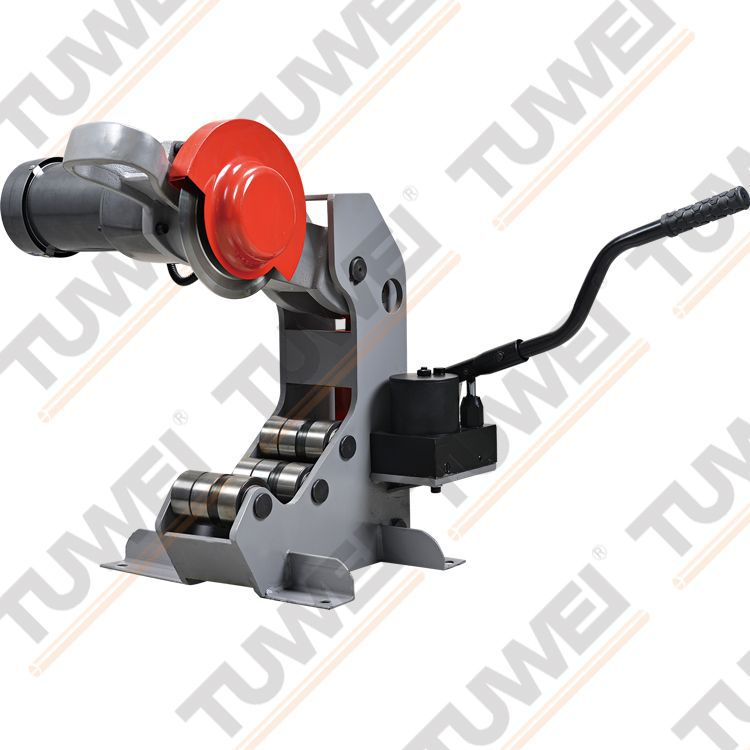
First and foremost is capacity and cutting principle. For instance, mid-sized industrial fabrication often relies on a dedicated 2-8 pipe cutter. These specific machines are engineered to handle outer diameters from 2 inches up to 8 inches. By utilizing a cold cutting mechanism driven by high-torque motors, they slice through stainless steel without generating sparks or altering the heat-affected zone.
Specifically, variable speed control is arguably the most critical operational parameter. Cutting stainless steel requires a counterintuitive approach compared to softer metals. It demands lower RPMs but significantly higher torque. Running a blade too fast will instantly burn the teeth and work-harden the pipe. The ability to dial down the RPM ensures the blade bites into the material cleanly with every rotation.
In addition, thermal management is mandatory. A machine designed for stainless steel must feature a robust cooling system. This can be a built-in flood coolant system that constantly washes over the blade, or a micro-drop minimum quantity lubrication system. Applying precise amounts of cutting fluid directly to the cutting edge prevents premature blade failure.
Finally, examine the clamping mechanism. Stainless steel piping is highly susceptible to crushing or surface scratching. Look for machines featuring concentric clamping systems, collets, or cast-iron V-block vises. The clamping mechanism must distribute pressure evenly around the circumference of the pipe. It needs to hold the material rigidly without causing ovality or marring the polished exterior finish.
While mechanical features dictate the quality of the cut, your production volume should dictate the level of automation. The decision hinges on your operational scale, labor availability, and required repeatability.
Manual machines require the operator to physically load the pipe, secure the vise, and pull the cutting head down through the material. Semi-automatic machines automate the clamping and the cutting stroke but still require manual material feeding. These systems are ideal for small fabrication workshops, custom prototyping, and on-site construction environments. They offer a lower upfront capital investment and are highly flexible for changing pipe sizes frequently.
In contrast, fully automatic tubing cutters handle the entire process without human intervention. The operator loads a bundle of raw pipes into a magazine. The machine then automatically feeds the material, clamps it, cuts it to precise lengths, and sorts the finished pieces. While the initial acquisition cost is substantial, the return on investment for mass production facilities is realized rapidly. Automation drastically reduces direct labor costs, eliminates operator fatigue, and ensures absolute dimensional repeatability.
Processing standard 20-foot or 6-meter stainless steel pipes presents unique logistical and mechanical challenges. Due to the heavy weight and length of the material, the pipe is prone to sagging at the ends. If a pipe is not perfectly level when it enters the cutting zone, it creates a dangerous pinch point. As the blade cuts through, the sagging weight causes the kerf to close in on the blade. This acts like a vice grip, leading to severe binding, shattered blade teeth, and inaccurate cuts.
Proper material handling is just as critical as the industrial pipe cutting machine itself. Extra-long pipes require dedicated support infrastructure. Utilizing heavy-duty roller stands or automated material loading tables is essential. These supports must be precisely leveled with the machine's vise bed to ensure the pipe feeds in perfectly horizontally. For high-volume environments, motorized roller conveyors synchronize with the machine's feeding mechanism to move the heavy material effortlessly.
Furthermore, unsupported long pipes act like tuning forks. They amplify vibrations generated during the cutting process. This vibration manifests as blade chatter, causing the blade to bounce microscopically against the tough stainless steel. Chatter is the leading cause of premature blade failure and jagged cut edges. Rigidly supporting the pipe at multiple intervals along its length dampens these harmonics, ensuring a smooth, continuous shearing action.
Even with the best machinery, technique plays a vital role. The feed rate follows a strict rule when dealing with stainless steel. If the feed rate is too slow, the blade teeth rub against the metal without penetrating. This generates massive heat and instantly work-hardens the surface. If the feed rate is too fast, the mechanical shock will chip or break the blade teeth. The trick is to apply constant, aggressive, and steady pressure. Each tooth must take a definitive chip of metal out of the pipe, carrying the heat away with it.
Selecting the correct Teeth Per Inch is equally vital. The general machining rule dictates that at least three blade teeth must engage in the material's wall thickness at all times. For thin-walled stainless tubing, a fine tooth pitch is required to prevent the teeth from straddling the wall and snagging. Conversely, for thick-walled Schedule 40 or 80 pipes, a coarse tooth pitch is necessary. Larger gullets clear out the larger volume of metal chips being removed.
While utilizing the correct machine and speed will minimize burr formation, microscopic sharp edges may still occur. For high-purity applications like sanitary plumbing, these edges must be addressed. Utilizing dedicated deburring tools or automated abrasive deburring machines ensures a perfectly smooth, sanitary finish that meets the strict requirements for automated orbital welding preparation.
Stainless steel chips and swarf are incredibly tough and abrasive. If left to accumulate, they will work their way into the machine's moving parts, lead screws, and linear guides. This causes severe mechanical jamming and premature wear. Implementing a strict daily cleaning protocol to vacuum or brush away all metallic debris is the absolute first line of defense in machine maintenance.
The mechanical longevity of your equipment relies heavily on proper lubrication. Operators must regularly check the levels of cutting fluids and ensure the coolant pump delivers a consistent flow without blockages. Additionally, the machine's internal gears, pivot points, and clamping lead screws must be periodically greased according to the manufacturer's specifications.
Never wait for a blade to fail completely before replacing it. Operators should be trained to visually inspect the blade for rounded tips, chipped teeth, or excessive metal build-up on the cutting edges. A dulling blade requires more force to push through the material. This strains the machine's motor and increases the risk of work-hardening an expensive piece of tubing. Finally, periodically calibrate the machine using precision machinist squares to check the alignment of the clamping jaws relative to the cutting head.
Successfully processing stainless steel relies entirely on matching the right technology with the specific demands of your material. Standard tools simply cannot withstand the heat and friction generated by this tough alloy. Whether you are dealing with sanitary tubing or heavy industrial piping, utilizing a purpose-built cold cutting system is the only way to guarantee weld-ready results.
When upgrading your fabrication floor, prioritize essential features like variable speed control, rigid clamping mechanisms, and robust coolant systems. Assess your daily production volume carefully to determine whether a manual setup will suffice or if a fully automated system is required to maintain your margins.
Stop letting ruined blades and work-hardened pipes destroy your production schedule. Take the time to evaluate your current bottlenecks. By exploring professional Tuwei pipe cutting solutions, you can find the exact equipment tailored to your stainless steel fabrication needs. Secure perfectly smooth cuts, extend your blade life, and build a highly efficient production workflow today.
While you can physically use some standard cutters, it is highly discouraged. Standard blades will dull rapidly, and the lack of proper speed control or cooling mechanisms will likely ruin the stainless steel pipe via heat tinting and severe work hardening.
For cold saws and orbital cutters, Cobalt-alloyed High-Speed Steel or Tungsten Carbide-tipped blades are the premier choices. They offer exceptional heat resistance, hardness, and the ability to maintain a sharp edge under intense friction.
Use equipment with a built-in coolant system, operate at a low RPM, and maintain a steady, aggressive feed rate. This combination ensures that the generated heat transfers into the metal chips being removed, rather than sinking into the pipe itself.
High-quality automatic machines, especially dedicated cold saws and orbital cutters, are engineered to leave a nearly burr-free finish. This precision significantly reduces, or entirely eliminates, the need for time-consuming secondary deburring processes.
Stainless steel requires low RPMs and high torque. Depending on the blade diameter and pipe thickness, cold saws typically run between 20 to 60 RPM for stainless steel. Running faster than this drastically increases friction, causing the blade to burn up and the material to work-harden.
Industrial cold cutting machines are highly capable. Depending on the specific model and motor size, a robust cold saw can easily cut through thick-walled stainless steel, including Schedule 40, Schedule 80, and even solid stainless bar stock up to several inches thick, provided the correct blade pitch is used.